The original audience knows things the next one does not
Imagine an old photograph posted to mark the anniversary of a creative project. People involved in the project recognize it immediately. A stranger encountering the image without its caption might assume it was made that morning. The misunderstanding does not require a dishonest photograph; it requires a missing piece of information.
Now imagine a light joke intended for friends appearing beside a professional profile. The friends may know what is being exaggerated. The new audience may reasonably read the sentence more literally. The people viewing it are not standing in the same conversation, even if the screen displays identical words.
These examples are ordinary on purpose. Context collapse does not only matter when a post becomes controversial. It also affects whether a recommendation sounds personal or professional, whether an image reads as a portfolio sample or a daily update, and whether a comment feels familiar or unexplained.
Research names the audience problem
Alice Marwick and danah boyd’s 2011 article examines how Twitter users imagined and managed audiences when social contexts overlapped. Participants described approaches such as addressing particular audiences and withholding certain subjects. The study concerns a specific platform and period; it should not be treated as a measurement of every current social-media environment.
Its central question remains useful for an editorial reading of images: who does a post seem to be speaking to, and what does it assume that audience already knows? The answer can be different from the audience that eventually encounters it.
Source: Marwick and boyd (2011), Twitter users, context collapse and the imagined audience
An image is evidence of a frame, not a complete biography
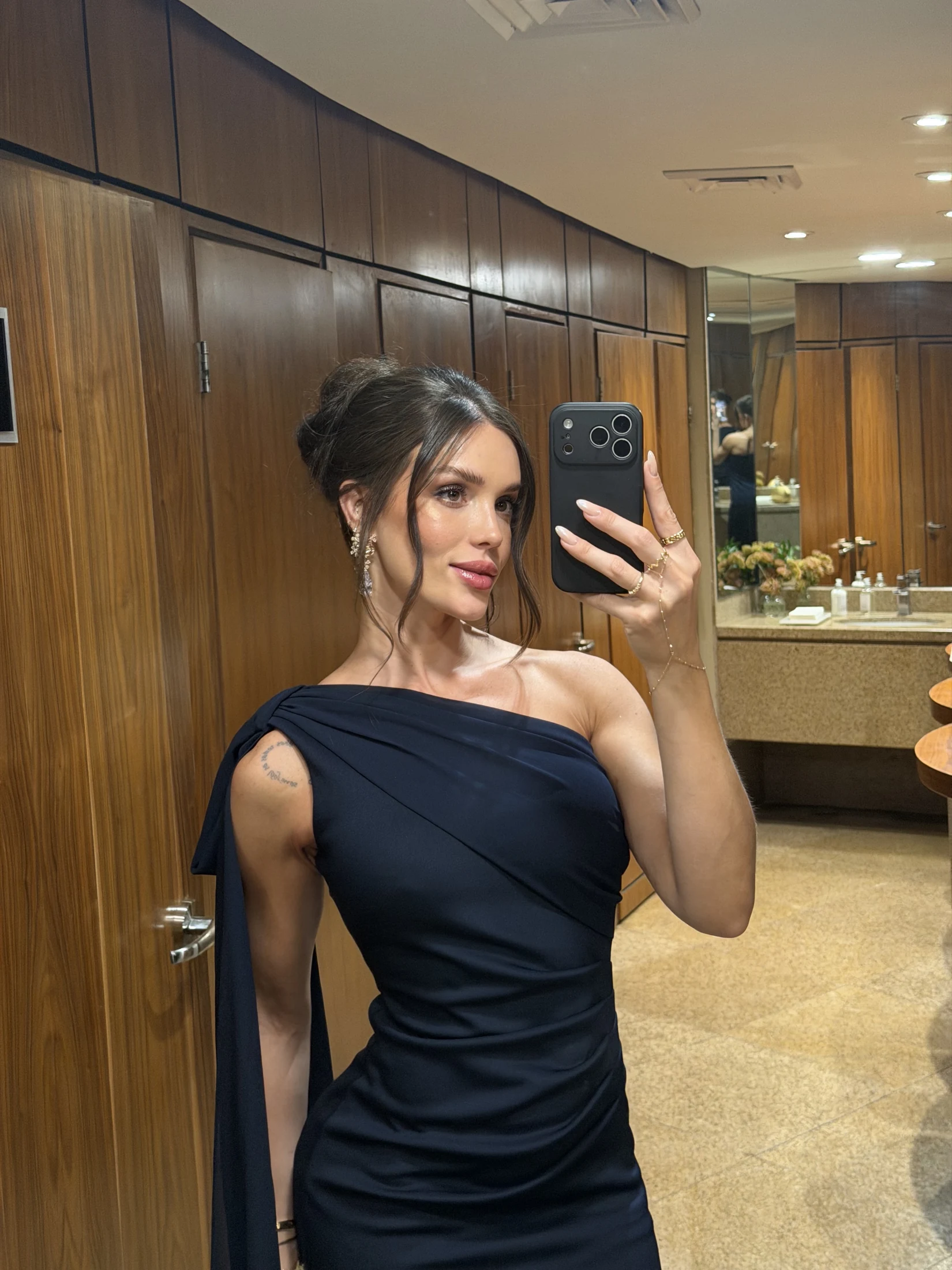
A photograph can show clothing, a pose, a visible setting and a moment selected by its maker. It cannot, by itself, supply all of the relationships, intentions or events outside that frame. A strong visual impression may make a story feel obvious without providing the information needed to establish it.
It helps to separate observation from inference. The person is wearing a particular outfit is an observation. The person must hold a particular attitude because of that outfit is a further claim. The second does not acquire the same certainty as the first merely because both arise while looking at the same image.
This distinction is not a demand to stop interpreting art or photography. Interpretation is part of their interest. It is a request to notice when an interpretation starts being repeated as a fact about the person depicted. Images can invite ideas without confirming every story a viewer attaches to them.
Useful context can be brief and specific
A caption does not need to anticipate every possible reaction. Sometimes a date, the purpose of a project or a clear indication that an image belongs to an archive will answer the most likely question. The best contextual detail is often the one that prevents a concrete misunderstanding, not the one that explains the creator’s entire life.
A portfolio page can help by keeping the image beside its original description. A stable link makes that context available when someone wants to check it. It does not guarantee that later viewers will follow the link or that every repost will preserve the description.
The limitation is important. No caption can control all future audiences. Adding context is a contribution to clearer communication, not a promise of complete control over reception. A creator should not have to write a defensive essay under every photograph to deserve a fair reading.
Readers also have an editorial role
Before passing along a strong interpretation, a reader can look for the original page, check whether the image is current and distinguish the creator’s words from a later caption added by someone else. These are simple reading choices, not a guarantee that every uncertainty can be resolved.
When the original context is unavailable, uncertainty is still an accurate result. It is possible to say that an image exists without claiming to know the full circumstances around it. A gap in the record does not have to be filled with the most dramatic explanation.
Fairness also works in the other direction. When context supports a clear criticism, acknowledging it should not become a ritual way to dismiss the criticism. The aim is proportion: evaluate the actual statement, the available evidence and the uncertainty that remains, rather than defending or condemning an imagined whole person.
Make room for more than one reading without abandoning facts
Different audiences can reasonably notice different aspects of the same work. A stylist may notice shape, a photographer may notice light and a friend may recognize a particular day. None of those readings needs to cancel the others. They become a problem when one perspective claims knowledge it does not have.
Context collapse asks for a modest kind of care: explain what is useful when publishing, check what is available when reading and resist treating a fragment as a finished account. A photograph can begin a conversation. It should not be asked to contain every conversation that could ever be had about its subject.
The frame-and-context reading
A short editorial check before making or sharing a claim about an image:
- Origin: where did the image or statement first appear?
- Timing: is its date clear, and does the current caption preserve it?
- Audience: what knowledge might the original audience have had?
- Evidence: what is visible, and what is being inferred beyond the frame?
- Limit: what remains unknown even after checking the available context?
Research and further reading
Research is included to distinguish evidence from editorial interpretation. This essay does not replace individualized professional advice.
